7 Interesting Facts First-Time Visitors Should Know About Toronto
A Different Way to Discover Toronto.
Experience the City Beyond the Landmarks
Toronto is known for its skyline, multicultural neighborhoods, and busy downtown streets. But beneath that familiar image is a city shaped by hidden infrastructure, extensive natural corridors, unusual architectural history, and layers of cultural diversity.
If you are looking for interesting facts about Toronto beyond the usual tourist attractions, these lesser-known details offer a different way to understand the city.
From an underground pedestrian network stretching for more than 30 kilometres to ravines that form a vast natural system through the urban landscape, Toronto has plenty of surprises waiting to be discovered.
1. Toronto Has a Massive Underground Pedestrian Network
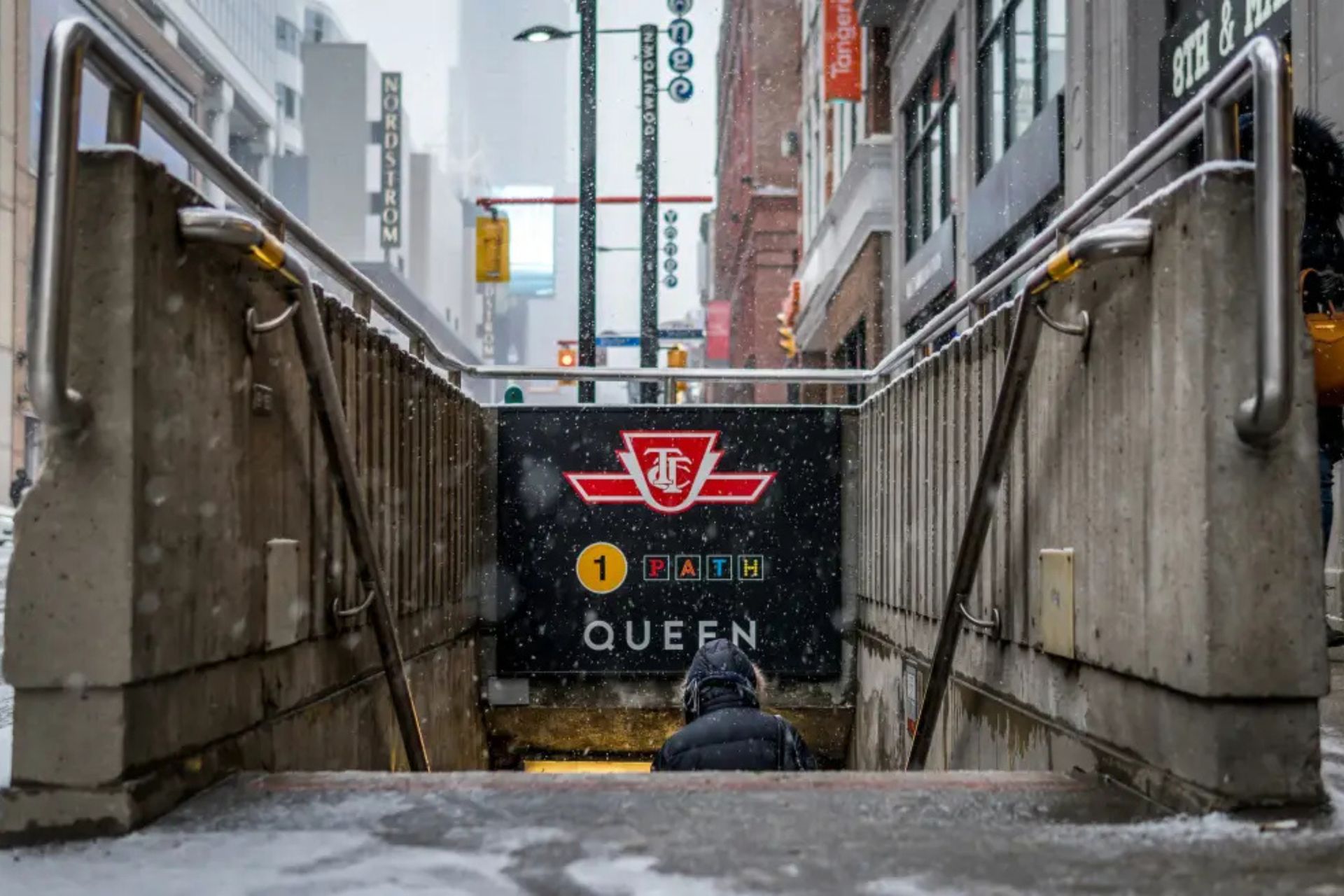
One of Toronto's most surprising features is PATH. The mostly underground pedestrian network running beneath Downtown Toronto.
According to the City of Toronto, PATH stretches for more than 30 kilometres and connects more than 75 buildings, including office towers, hotels, shopping areas, transit stations, and major attractions.
The network includes approximately 3.7 million square feet of retail space and connects to six subway stations and Union Station.
The system is particularly useful during Toronto's colder months, allowing pedestrians to move between many downtown destinations without spending the entire journey outdoors.
Insider Tip: PATH is not one continuous tunnel owned by a single operator. Different sections are owned and managed by the buildings they pass through, which is why navigation can feel surprisingly complex for first-time visitors.
Official source:
www.toronto.ca/explore-enjoy/visitor-toronto/path-torontos-downtown-pedestrian-walkway/
2. Toronto Has More Than 300 Kilometers of Ravines
Toronto's natural landscape is much larger than its downtown parks might suggest.
The city has a ravine system extending for more than 300 kilometres, creating interconnected green corridors through areas that can feel surprisingly removed from the surrounding urban environment.
The City of Toronto describes ravines as an essential part of the city's green infrastructure. They support biodiversity, recreation, stormwater management, and climate resilience.
One particularly interesting example is the Don Valley ravine system, where trails and wooded areas exist alongside major transportation infrastructure such as the Don Valley Parkway.
The City and Toronto and Region Conservation Authority have estimated that the city's ravine system provides approximately $822 million in ecosystem services each year, including recreation, health benefits, air-quality improvements, and carbon sequestration.
Toronto Secret: You can be surrounded by one of the city's busiest transportation corridors and still find yourself on a wooded trail that feels remarkably removed from downtown.
Official source:
www.toronto.ca/city-government/accountability-operations-customer-service/long-term-vision-plans-and-strategies/ravine-strategy/
3. Guild Park Is Filled With Architectural Fragments
In Scarborough, Guild Park and Gardens offers one of Toronto's most unusual combinations of art, architecture, and nature.
The 88-acre site contains forests, gardens, shoreline areas, public art, sculptures, and historic architectural fragments.
Many of the architectural fragments were salvaged from historic buildings and incorporated into the grounds during the site's development as the Guild of All Arts. This means visitors can encounter pieces of Toronto's architectural past outside their original buildings.
The park is also home to the Clark Centre for the Arts, which offers galleries, studios, courses, and workshops.
Insider Tip: Guild Park is more than a conventional sculpture garden. Look closely at the architectural pieces themselves. Some are remnants from large 19th and early 20th-century buildings that were saved and relocated to the site.
Official source:
www.toronto.ca/explore-enjoy/history-art-culture/cultural-centres-galleries/clark-centre-for-the-arts/
4. Toronto's Public Art Collection Is Larger Than You Might Expect
Toronto's public art is not limited to a few famous installations downtown.
The City of Toronto's public art map currently features more than 450 works of public art throughout the city.
The city's Public Art and Monuments Collection alone contains close to 400 works managed and maintained by the City.
This creates an interesting contrast within Toronto. Art is visible throughout the streets, parks, plazas, and public spaces, while another major part of the city's infrastructure exists underground through PATH.
Pro Tip: Instead of searching only for Toronto's most famous landmarks, use the City's public art map to discover installations near the neighborhoods you are already exploring.
Official source:
www.toronto.ca/explore-enjoy/history-art-culture/public-art/public-art-map/
5. The Toronto Islands Were Once Part of a Larger Sandspit
The Toronto Islands may look like a permanent chain of islands today, but their landscape has changed considerably over time.
According to the City of Toronto's natural heritage research, the islands are largely composed of fine sand that formed part of the dune system of the original peninsula.
Human intervention has significantly changed the landscape. Some islands, including Algonquin Island and Snake Island, were constructed using excavated material in the early 20th century. The result is a landscape shaped by both natural sediment processes and human engineering.
Today, Toronto Island Park includes several distinct areas, including Centre Island, Hanlan's Point, Ward's Island, Olympic Island, Algonquin Island, and Snake Island.
Toronto Secret: The islands are not simply a recreational escape. Their beaches and dunes form a relatively uncommon freshwater coastal ecosystem along Lake Ontario, with habitats for species adapted to a highly dynamic environment.
Official source:
www.toronto.ca/explore-enjoy/toronto-island-ferries/things-to-do-on-toronto-island/
6. Toronto's Multiculturalism Is Visible in Its Language Landscape
Toronto's cultural diversity is often discussed in broad terms, but local census data shows just how significant that diversity is.
The City of Toronto's 2021 Census* profile for North York shows that 52.7% of residents reported a mother tongue other than English or French.
Among the most common mother tongues were Mandarin, Tagalog, Cantonese, Iranian Persian, Spanish, Korean, and Russian.
Scarborough shows a similarly diverse linguistic landscape, with languages including Tamil, Cantonese, Mandarin, Tagalog, Urdu, Gujarati, and Bengali represented among its residents. This diversity is one reason Toronto's neighborhoods can feel dramatically different from one another.
Food, businesses, festivals, languages, architecture, and community institutions all reflect the histories of the people who have shaped the city.
*The data is from the 2021 Census, still the most recent one with published results; the 2026 Census has already been conducted but the numbers haven't been released yet.
Official source:
www.toronto.ca/wp-content/uploads/2024/01/8ce5-CityPlanning-2021-Census-Profile-North-York-CCA.pdf
7. Toronto's Famous Flatiron Building Has a More Formal Name
The Gooderham Building, commonly known as Toronto's Flatiron Building, is one of the city's most recognizable historic structures.
Located at 49 Wellington Street East, the building was completed in 1892 and designed by architect David Roberts Jr. The City of Toronto designated the building under Part IV of the Ontario Heritage Act in 1975.
Its unusual triangular form was not simply a stylistic choice. The building occupies a narrow site at the intersection of Wellington Street East and Front Street, creating the distinctive shape that made it one of Toronto's architectural landmarks.
Insider Tip: The Gooderham Building is particularly interesting when viewed as part of the surrounding St. Lawrence neighborhood rather than as an isolated landmark. The area contains layers of Toronto's commercial and architectural history within a relatively compact walk.
Official source:
https://www.historicplaces.ca/en/rep-reg/place-lieu.aspx?id=8311
Why These Toronto Facts Matter When You Visit
These details reveal something important about Toronto.
The city is not defined only by its skyline or its most famous attractions. Its character also comes from infrastructure that operates beneath the streets, natural systems running through urban neighborhoods, architectural fragments preserved in parks, and cultural communities that have shaped entire districts.
That is what makes exploring Toronto beyond the major tourist attractions so rewarding.
A trip can involve walking through Downtown Toronto, discovering a piece of public art, entering PATH, exploring a ravine, visiting the Toronto Islands, or finding a completely different cultural atmosphere in Scarborough or North York.
Discover Toronto From a More Local Perspective
Make Casa Hotels Your Base for Exploring It All
For visitors who want to see more than Toronto's major attractions, where you stay makes a real difference.
A well located unit gives you the flexibility to explore different neighborhoods during the day. A comfortable, thoughtfully designed space gives you a proper rest when you're ready to unwind.
Casa Hotels offers fully furnished accommodations in Toronto, with units built to let guests experience the city at their own pace.
Whether your plans involve exploring Downtown Toronto, discovering local neighborhoods, visiting the waterfront, or venturing beyond the most recognizable landmarks, a Casa Hotels unit gives you the ideal base for your Toronto adventure.
Toronto becomes much more interesting when you look beyond the obvious.
Explore the city, find its hidden stories, and make Casa Hotels your home base while you do it.